

Governance
Policy priorities
United works with policymakers at every level — international, federal, state and local — along with our extensive network of partners and stakeholders to advance policies and regulatory conditions that foster growth, drive innovation and strengthen our industry's economic contributions.
Strengthening the air traffic control system
United continues to engage policymakers and stakeholders to support implementation of the 2024 Federal Aviation Administration (FAA) reauthorization and advocate for additional policies that prioritize the safety, efficiency and reliability of our nation’s aviation system. We are especially focused on improving the nation’s Air Traffic Control (ATC) system and supporting its technology, infrastructure and workforce needs.
Under the FAA’s leadership, commercial aviation in the United States remains among the safest in the world. That record depends on a resilient ATC system, yet chronic controller shortages and aging technology contribute to delays and cancellations that affect customers, employees and airline operations across the industry.
Modernizing the ATC system and building capacity
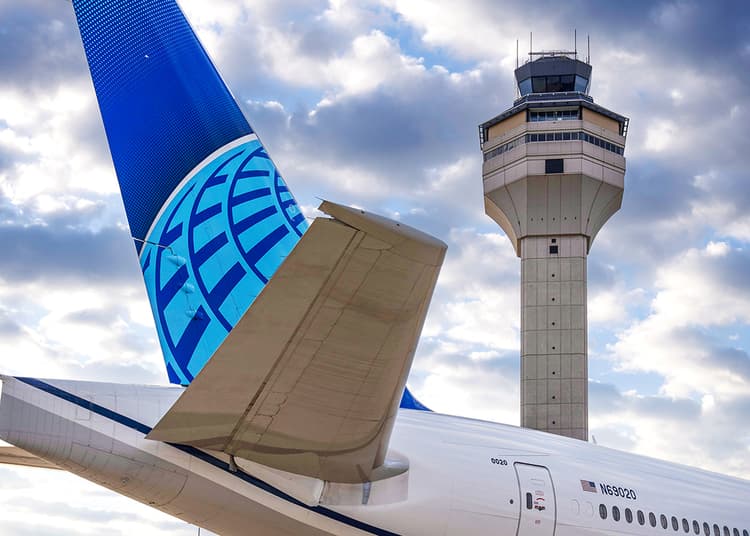
To help address these systemic challenges, United supports increased, stable and predictable funding to modernize the ATC system, along with multiyear planning that reflects projected traffic growth. We continue to champion these causes with industry organizations, including Airlines for America and the International Air Transport Association, as well as with government agencies, including leaders in Congress and the presidential administration. In 2025, with our strong support, Congress provided $12.5 billion to modernize our ATC system — an important down payment on the investments needed to meet the needs of the flying public now and in the future. We continue to advocate for the additional funding needed to fully upgrade our ATC system.
While the FAA has taken steps to increase the number of air traffic controllers, staffing shortages persist. The FAA Academy is operating at capacity, with demand for controllers far outpacing the number expected to become certified. United will continue to work closely with the secretary of transportation, the FAA administrator and the leadership of the FAA’s Air Traffic Organization to expand training capacity. We support the FAA’s initiative to grow controller training partnerships with private aviation colleges and universities to address near- and long-term ATC workforce shortages.
United Next and workforce growth
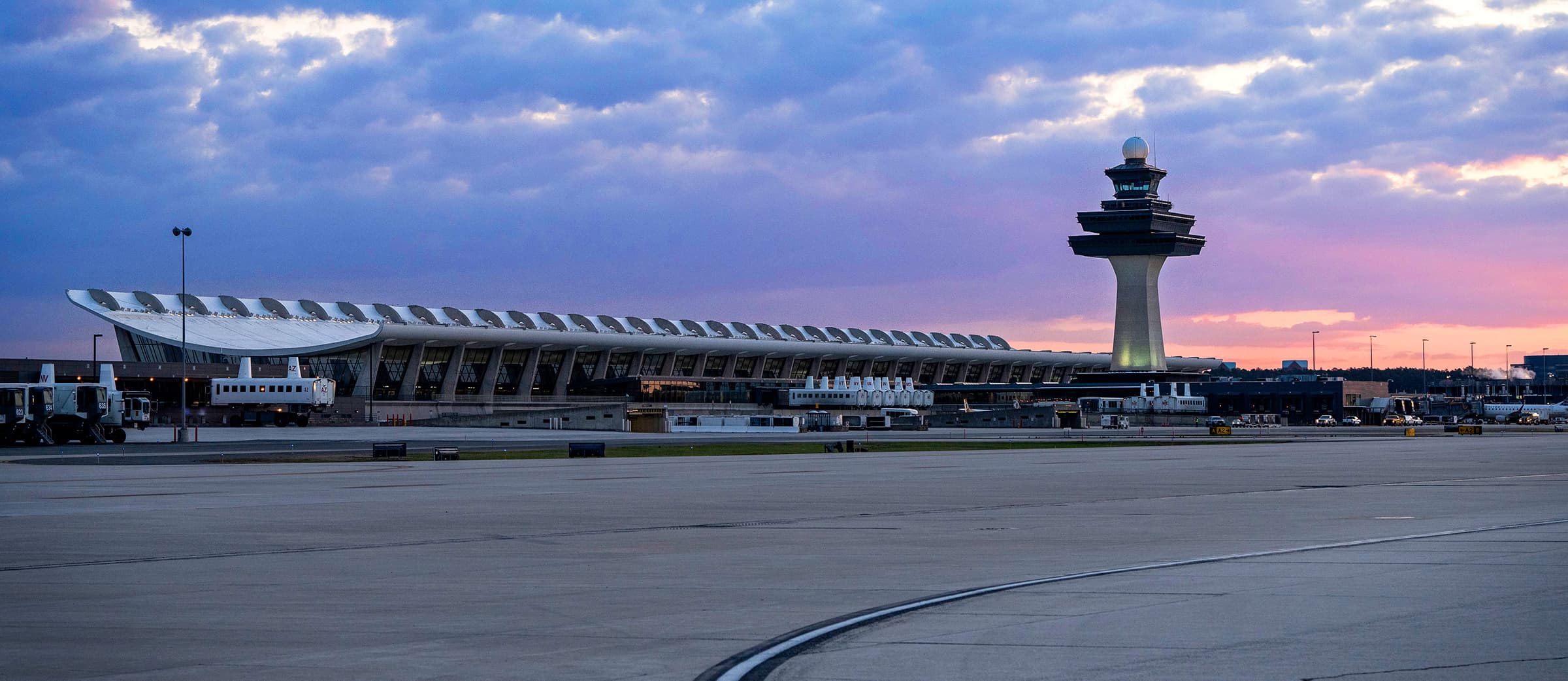
United Next is our enterprise-wide investment in fleet, network, airports and customer experience. Over the next several years, we intend to introduce hundreds of new aircraft to our fleet and expand our global network to reach new destinations. This growth depends on coordinated planning with government partners who control airspace, security processes and airport infrastructure. To support the United Next goals, we work with the Transportation Security Administration, U.S. Customs and Border Protection, the FAA and others to advance high levels of safety and security while improving throughput and customer experience. We also partner with state and local governments on major airport projects, including terminal developments at Houston George Bush Intercontinental Airport, Chicago O’Hare International Airport and Washington Dulles International Airport.
 IAH - Houston
 ORD - Chicago O'Hare
 IAD - Washington Dulles
As the airline grows, our workforce must also grow to meet our needs. United invests in programs that help build the next generation of pilots, mechanics, technicians and digital talent, and we encourage policymakers to support federal, state and local workforce efforts that expand scholarships, financing and technical training. These programs help address industrywide labor constraints while ensuring United can meet its hiring needs in hub communities.
Innovation and technology
United Airlines has positioned itself as a leader in innovation within the aviation industry, particularly through its strategic investments in technology, new energy sources and customer experience. The investments enhance our global competitiveness, improve the customer experience and allow us to operate more efficiently in the United States and around the world. Most notably, working with the FAA on certification, we are well on our way to equipping our entire fleet with free Starlink internet, a major leap in connectivity for our customers. We also work with the Transportation Security Administration and U.S. Customs and Border Protection to ensure the efficiency and effectiveness of these enhancements.
Our policy priorities look far beyond the next quarter to focus on the next decade. Through our United Airlines Ventures and the UAV Sustainable Flight FundSM, we are investing in energy security and diversification, advanced air mobility, electric and hydrogen-powered flight technology and supersonic flight.
Global and regulatory environment
United operates on a global scale and competes with airlines worldwide. We support government policies to ensure competition is free and fair, without government interference that tilts the playing field in favor of foreign competitors. United partners with governments on legislative and regulatory activities aimed at improving the aviation industry for our customers, employees and communities. Smart, predictable regulation is critical to the industry’s ability to connect people safely and efficiently, generate jobs and invest in new technology. Our focus is on practical, evidence-based policies that improve safety, reliability and efficiency in ways that are good for business and the broader economy.